
101 Fly Creek Ave #301, Fairhope, AL 36532

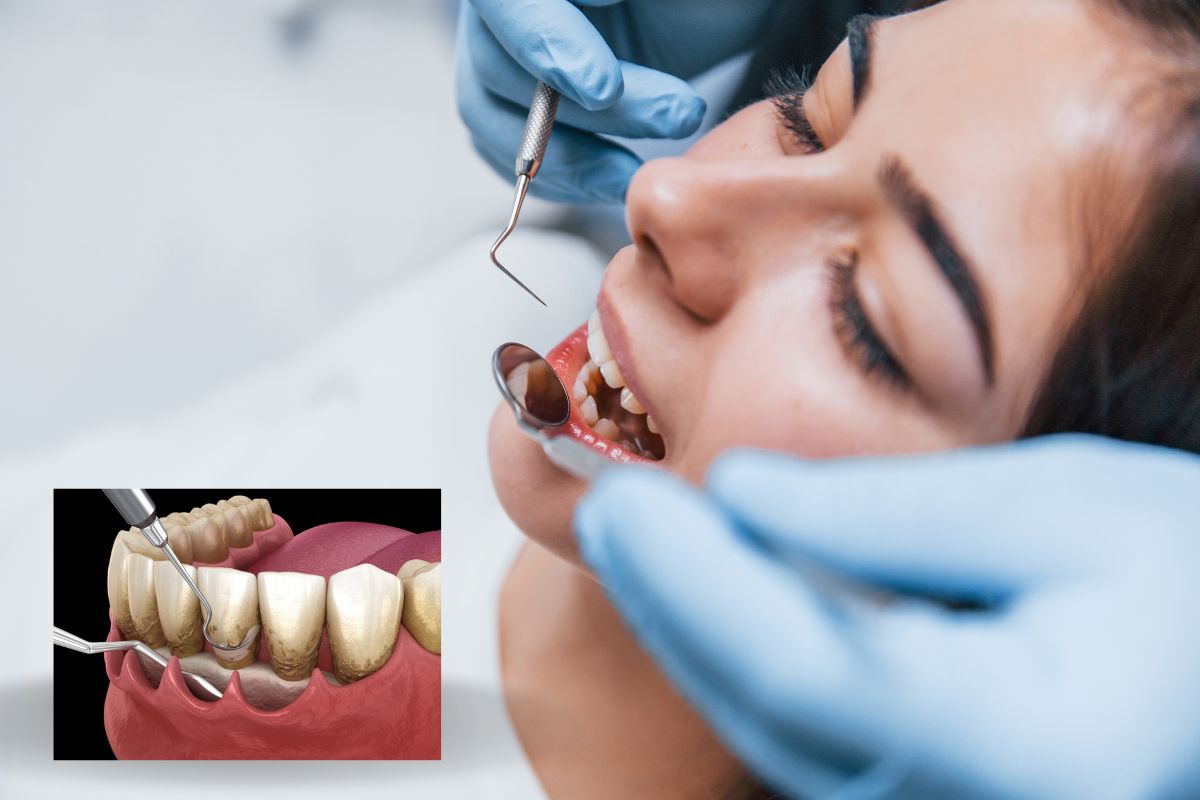
Your hygienist mentioned your gum pockets. You nodded. You had no idea what that meant.
That moment happens more often than you might think. Most people leave a dental appointment with a vague sense that something was off but no clear picture of what it means or what comes next.
If your dentist has recommended a deeper cleaning, this blog explains exactly what that is, why it matters, and what to expect.
What Is Scaling And Root Planing?
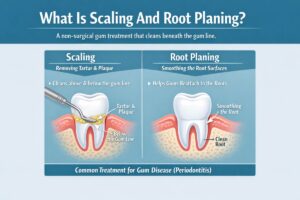
It’s a non-surgical gum treatment that cleans beneath the gum line, places where a regular cleaning can’t reach.
Scaling and root planing in Fairhope, AL, are very common treatments for the early to moderate stages of gum disease, or periodontitis. It differs from your routine prophylactic cleaning in one significant way: it treats the buildup of plaque and tartar that has embedded itself under your gums and along the roots of your teeth.
Here is what each part means:
- Scaling: cleans tartar (calcified plaque) from tooth surfaces and beneath the gum line.
- Root planing: smoothed out the root surface so that bacteria have fewer places to cling to and the gums can reattach normally.
Why You Need More Than a Regular Cleaning
Regular checkups and cleanings remove visible tartar from your teeth. It keeps gums healthy. But when gum disease has advanced, that’s no longer enough.
When bacteria settle in the space between your gum and your tooth, known as a gum pocket, and the pocket deepens beyond 3mm, inflammation occurs. Regular cleaning tools cannot reach those depths.
If left untreated:
- Gum tissue breaks down
- Loss of jawbone supporting the teeth
These can become loose or need to be removed.
The Centers for Disease Control and Prevention reports that nearly half of U.S. adults over 30 have periodontal disease in some form. Most do not realize it until the harm is already underway.
Symptoms That May Indicate You Need This Procedure
You may not feel pain. In the early stages, gum disease is often asymptomatic (showing no symptoms). Watch for:
- Bleeding gums when you brush or floss
- Persistent bad breath
- Gums that appear red, swollen, or are receding away from the teeth
- Sensitivity along the gumline
- Loose teeth or a shift in your bite
If your dentist measures the pocket depths and finds readings of 4mm or greater in several places, a deeper cleaning, such as scaling and root planing, may be appropriate. This is the next step you should consider in your gum health.
What Will Happen During the Procedure?
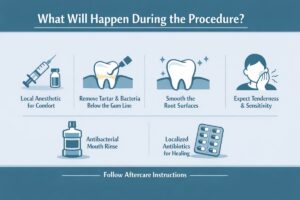
A deep clean can be done in 1 or 2 appointments, often divided by sections of the mouth. During each appointment, your dentist or hygienist will:
- Give you a local anesthetic so that you will be completely comfortable
- Use specific instruments to remove the buildup of tartar and bacteria below the gum line
- Smooth the root surface of your teeth, preventing bacteria from reattaching to them
Most individuals tend to feel tenderness, soreness, or sensitivity for a few days after the procedure. Typically, taking over-the-counter pain medication and gently brushing are sufficient to recover.
Your dentist may recommend an antibacterial mouth rinse after the procedure, or they may provide localized antibiotics to help with healing.
After the Procedure: What Happens Next?
The treatment is not a one-time fix. Therefore, it is critical to participate in follow-up care:
- You will continue treatment with regular “periodontal maintenance” visits every 3-4 months, replacing your current dental cleanings.
- Your dentist will remeasure the depth of your gum pockets to monitor tissue healing.
- Brushing and flossing daily at home remain crucial.
Participate in follow-up care, many patients see significant improvement in their gum health, aiming to prevent the disease from progressing.
Is It Covered by Insurance?
Most periodontal services will be at least partially reimbursed by your dental insurance policy. Since coverage plans can vary greatly and so will the insurance amount, it is best to check with your insurance company to clarify your benefits before your appointment.
Conclusion: Do Not Wait Until Your Teeth Are at Risk
Gum disease develops over time without showing any outward symptoms. By the time you actually notice something, significant damage has already been done. By providing thorough scaling and root planing in Fairhope, AL, the problem can be resolved before it requires surgical treatment.
If you know your gum pockets are at least 4mm deep, or if a periodontist has not evaluated you, now is the time to address this.
At Hollon & Taylor Dental in Fairhope, we provide comprehensive gum evaluations and individualized periodontal care to all of our patients in our local community and the surrounding areas.
Contact us to schedule your gum evaluation today.
Common Questions People Ask
- How do I know if I need scaling and root planing in Fairhope, AL, instead of a regular cleaning?
Your dentist will measure your gum pockets during an exam. Depths of 4mm or more, combined with signs of inflammation or bone loss, typically indicate the need for a deeper cleaning.
- Is the procedure painful?
Local anesthesia is used, so you should not feel pain during the treatment. Some tenderness and sensitivity afterward is normal and usually resolves within a few days.
- How long does it take?
Most patients complete the treatment in two appointments, each covering one side of the mouth. Each session typically takes about 45 to 90 minutes.
- Will my gums fully recover after the procedure?
Many patients see significant improvement in gum health with consistent follow-up care. The goal is to stop disease progression. In some cases, further treatment may be needed if pockets remain deep.