
101 Fly Creek Ave #301, Fairhope, AL 36532
You brush twice a day. You floss. You go in for your cleanings. So when your dentist suggests a fluoride treatment, your first reaction is likely to be, “Isn’t that for kids?”
You’re not the only one who thinks that. In Fairhope, most adults react in the same way. But here’s the thing: fluoride doesn’t stop being helpful when you become an adult. In fact, for a lot of grown-ups, it’s more important now than it ever was as a child.
This isn’t about trying to convince. It’s a matter of ensuring you really know what’s out there to keep your teeth healthy, and if it applies to you.
Why Adults Often Need Fluoride More Than They Think
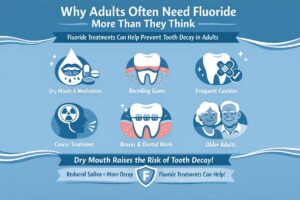
Fluoride is most often associated with kids’ oral health. That’s fair, it’s been marketed that way for decades. But studies have shown that professional fluoride treatments for adults are important, as they can help prevent moderate to high risk of tooth decay.
Who falls into that category?
- People with dry mouth (a common side effect of medications like antihistamines, antidepressants, and blood pressure drugs)
- Adults with receding gums, which exposes root surfaces that are more vulnerable to decay
- Anyone with a history of frequent cavities
- People undergoing cancer treatment, particularly radiation to the head or neck
- Those with braces, bridges, or crowns — areas where plaque tends to hide
- Older adults, who naturally experience more enamel wear over time
Dry mouth alone is a significant risk factor. Saliva fights acids and clears away bacteria. Without enough of it, decay goes faster than most people think. Fluoride treatment in Fairhope, AL, is one of the most effective ways to counteract that.
What Does Professional Fluoride Really Do?
Fluoride helps strengthen tooth enamel, the hard, outer layer of your teeth, which makes it less susceptible to acid attacks from bacteria and food. It can also help reverse early-stage decay before it turns into a cavity.
At-home toothpaste contains fluoride, but in much lower concentrations than a dentist applies. Professional treatments deliver a higher dose directly to the teeth, where it is absorbed quickly.
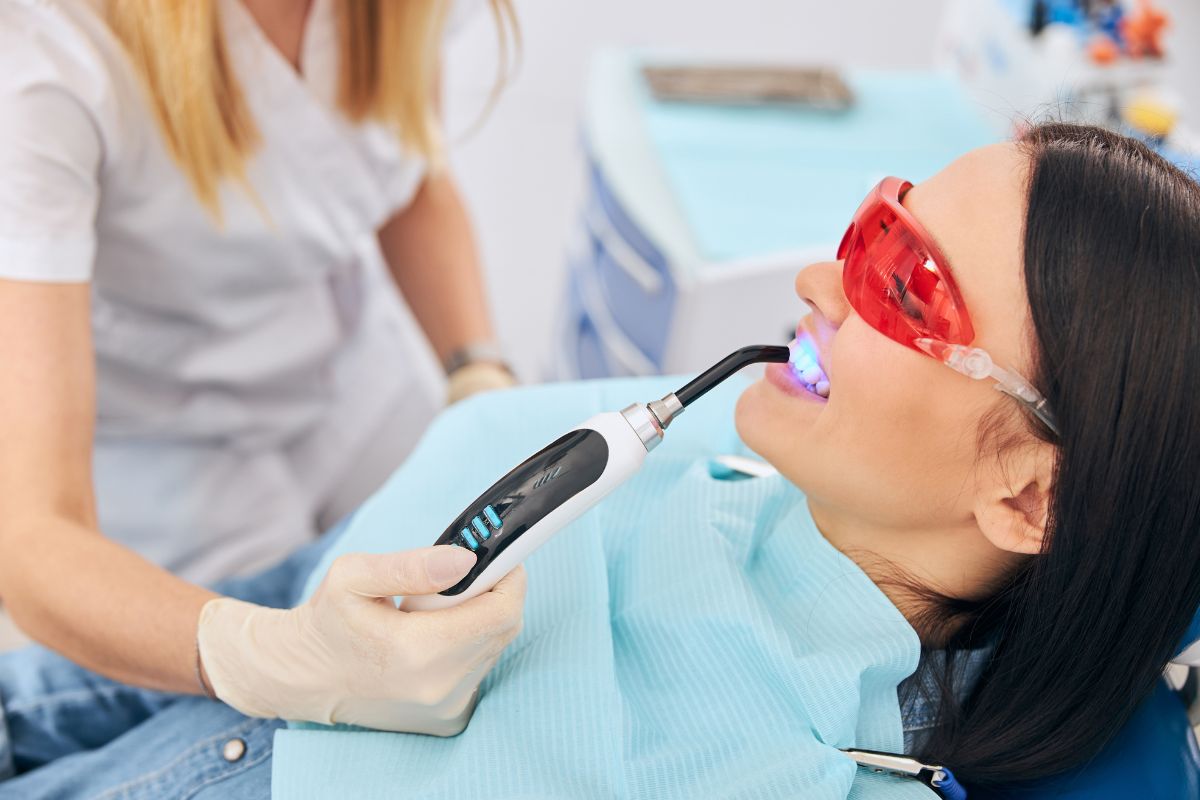
The application itself only takes a couple of minutes. It’s usually a gel, foam, or varnish that your dentist applies at the end of your cleaning. No discomfort. No downtime.
How Medications Can Contribute to Tooth Decay
This is something many adults in Fairhope don’t link until it’s too late.
Several common medications decrease saliva flow. That includes:
- Antihistamines (allergy medications)
- Antidepressants and anti-anxiety medications
- Blood pressure medications
- Diuretics
- Certain pain relievers
Less saliva means a drier mouth, which creates a more acidic environment where bacteria flourish. If you’re living with a chronic condition and taking daily medicines, your teeth are silently paying a price even if your oral hygiene regimen is on point.
One of the most effective ways to offset this is through preventive dental care, including fluoride therapy. Scheduled with regular teeth cleanings and brushing, it gives your enamel a fighting chance.
What About Receding Gums?
Gum recession exposes the root surfaces of your teeth. Unlike enamel, roots don’t have a hard protective coating — they’re covered by a softer tissue called cementum, which wears down much more easily.
This is also why adults with any degree of gum recession are at increased risk of root decay and sensitivity. It is a widespread problem, particularly among those over 40, and often manifests itself more painfully as degeneration progresses gradually without any clear pain signals.
Fluoride varnish on exposed root surfaces slows that process down a little. It’s not a substitute for treating the underlying gum problem, but it’s an essential layer of protection rather.
Is It Safe?
Yes. Major health organizations like the American Dental Association and the Centers for Disease Control and Prevention have thoroughly researched professional fluoride treatment in Fairhope, AL and found it to be safe. It is at a higher concentration than toothpaste but still works effectively within established safety guidelines for clinical applications.
If you have particular concerns, especially regarding systemic fluoride intake, that’s a discussion to have directly with your dentist. Every patient’s situation is different.
How Often Should Adults Receive Fluoride Treatments?
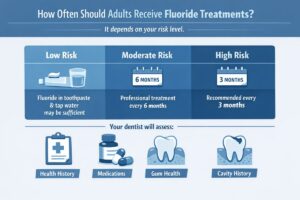
It depends on your risk level.
- Low risk: Fluoride in toothpaste and tap water may be sufficient
- Moderate: Professional treatment is usually every 6 months
- High risk: May be recommended every 3 months by your dentist
Your dentist can determine where you stand based on your health history, medications, gum health, and cavity history.
Making It Part of Your Routine
To be effective, fluoride treatments need to be part of a consistent oral care routine (like routine dental exams, routine hygienist visits, and daily brushing/flossing).
If you are an adult and have not talked to your dentist about fluoride, be sure to add fluoride as one of the topics of your next visit. Fluoride is one of the lowest-effort, high-impact preventative measures available.
Your Teeth Deserve the Same Care at 45 as They Did at 5
Many people do not prioritize adult dental care because they spend most of their time working, caring for their families, and pursuing other life goals. However, the cost of neglecting your teeth far exceeds the cost of taking preventative actions.
At Hollon & Taylor Dental, we offer a proactive approach to dental health by educating patients on how to care for their teeth throughout their lives, not just when there is a dental problem.
If you are due for a dental cleaning or want to learn about how fluoride treatment in Fairhope, AL could benefit your dental health, reach out to schedule an appointment to briefly discuss these important issues, which could help you avoid larger dental problems in the future.
Common Questions Most People Have
- At what age should adults start considering fluoride treatments?
There’s no specific age — it’s based on risk factors, not age. Adults dealing with dry mouth, gum recession, frequent cavities, or medication side effects may benefit at any age.
- Does dental insurance cover fluoride treatments for adults?
Coverage varies by plan. Many insurance plans cover fluoride for children but not adults. It’s best to check with your provider. Out-of-pocket costs are generally low given the preventive value.
- Is the fluoride applied at the dentist’s stronger than what’s in toothpaste?
Yes. Professional fluoride varnish or gel contains a significantly higher fluoride concentration than over-the-counter toothpaste. That’s why it’s applied in a clinical setting.
- Can fluoride treatment reverse existing cavities?
It can help reverse very early-stage decay (called demineralization) before a cavity fully forms. Once a cavity develops, it needs to be treated with a filling or other restoration.