
101 Fly Creek Ave #301, Fairhope, AL 36532

It can be a major setback when you lose a tooth; your appearance is affected, and your quality of life is reduced due to discomfort with eating and speech. Fortunately, dental implants provide a permanent solution that not only improves function but also aesthetics. Not everyone is a candidate for dental implants, and it’s best to know what qualifies someone for this procedure.
Your eligibility is based on several factors, including your overall health, gum health, and jawbone density. In this blog, we will explore the factors to consider before getting dental implant treatment, as well as whether it is a good fit for you. Whether you have one missing tooth or several, knowing whether you are a candidate is the first step to regaining your smile.
Am I a Good Candidate for Dental Implants?
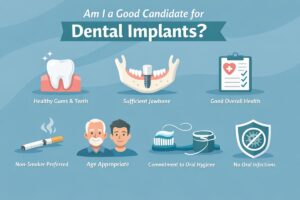
There are a few factors to consider to help ensure successful dental implant treatment in Fairhope. For many patients, implants are a great solution, but certain criteria must be met for the procedure to go well.
1. Healthy Gums and Teeth
Your gums must be healthy to support a dental implant. Infected or inflamed gums may affect the healing process. If you have gum disease, your dentist will likely advise treating it before continuing with the implant procedure. You may need a deep cleaning and additional treatments to help your gums heal before you can progress.
2. Sufficient Jawbone Density
The key factor that determines whether you are a candidate for dental implants in Fairhope is the quality of your jawbone. Because a dental implant is secured into the jawbone, sufficient healthy bone in the proper position is crucial. If you don’t have enough bone density, additional procedures such as bone grafting can build up your jawbone before the implants are placed.
3. Overall Health
Dental implant surgery requires you to be in fairly good health. Conditions such as poorly controlled diabetes or some forms of autoimmune disease can interfere with healing and may make endosseous implants a less suitable option. Your implant dentist will review your medical history and may even contact your physician if necessary before proceeding to ensure you’re a good candidate.
4. Non-Smokers Generally Do Better
Smokers tend to have more complications during and after the procedure because nicotine constricts blood flow, delaying tissue healing. It can affect the healing process and worsen the results of regular treatment. If you smoke, your dentist might recommend quitting or at least cutting back on smoking prior to the procedure.
5. Age Considerations
There’s no maximum age for receiving dental implants, but younger patients may not be the best candidates if their jawbones have not fully developed. Implants usually work best for people whose jawbones have completely matured, which takes place after 18 in girls and somewhere between 20 and 22 for boys.
6. Commitment to Oral Hygiene
Dental implant care means much stricter adherence to personal oral care. Like natural teeth, implants need to be brushed, flossed, and cleaned to stave off infection or failure. Without dedication to your oral health routine, you could damage the long-term success of your implants.
7. No Active Oral Infections
Disease in your mouth must also be addressed before implant surgery. Conditions such as untreated tooth decay or advanced gum disease can postpone your procedure, because an infection would jeopardize the implant’s ability to fuse with your jawbone.
How the Implant Process Works
The dental implant procedure is a well-organized operation that restores your smile and durability. Every step, from the consultation to the placement of your new tooth, is planned to ensure you get nothing but the best results. Here’s a brief summary of what to look forward to:
- Consultation and Evaluation: The first step involves assessing your oral health, taking X-rays, and determining whether endosseous implants are the right fit for you.
- Implant Placement: Your jawbone will be surgically implanted with a titanium post, which serves as the root for your new tooth.
- Osseointegration: This process can take a few months for the implant to integrate with the bone.
- Abutment Placement: After the implant has been successfully integrated, an abutment, a small post, is attached to hold the replacement tooth.
- Final Step: The custom-made crown is placed, completing the restoration and returning function and aesthetics.
Maintaining Your Dental Implants
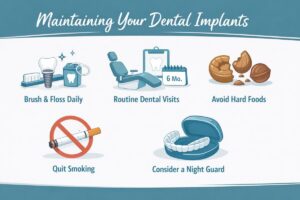
With proper care, dental implants are built to last a lifetime; however, like your natural teeth, they need routine maintenance to remain healthy and functional. Here’s how to care for your implants:
- Brush And Floss Daily: Clean your implants as you would natural teeth, using a soft-bristled toothbrush and non-abrasive toothpaste to help prevent plaque buildup and gingivitis.
- Routine Dental Visits: Visit the dentist every 6 months for check-ups to assess the health of your implants and surrounding tissues.
- Be Careful with Hard Foods: Avoid hard foods or chewing on anything that could damage your implants.
- Quit Smoking: Smoking can impair the healing process and affect gum health, making implant failure more likely.
- Consider a Night Guard: If you find yourself grinding your teeth during sleep, a custom night guard can help reduce wear on your implants.
Ready to Restore Your Smile?
Dental implants are a long-term solution for replacing missing teeth, providing both functionality and cosmetic appeal. If you are considering endosseous implants, the first step is to determine whether you’re a candidate for treatment by reviewing your oral health and other factors, such as gum condition, bone density, and overall health.
At Hollon and Taylor Dental Fairhope, we guide you every step of the way, from determining whether you are a candidate to post-implant care. Call us today to schedule a consultation and start your journey toward a healthier smile.
Questions People Ask About Dental Implants
- What are dental implants made of?
Dental implants are typically made of titanium, a strong, biocompatible material that integrates well with the jawbone, providing a stable foundation for the replacement tooth. Titanium is the ideal material for longevity and durability in dental implants. - How long do dental implants last?
With proper care, dental implants can last a lifetime. Regular cleaning, good oral hygiene, and routine dental visits help maintain their longevity. Implants are designed to be durable and can provide lasting benefits for many years. - Can I get dental implants if I have gum disease?
If you have gum disease, it must be treated before dental implants can be placed. Healthy gums are crucial for implant success. Your dentist will ensure any gum issues are resolved before proceeding with the implant procedure. - How long does the implant procedure take?
The dental implant process typically takes several months, as it involves multiple stages: initial placement, healing, and crown attachment. Healing times vary, but implants are designed for long-term success once fully integrated. - Are dental implants painful?
The dental implant procedure is performed under local anesthesia, so you won’t feel pain during the surgery. Some discomfort is normal after the procedure, but can usually be managed with over-the-counter pain medication during the healing process. - Are dental implants covered by insurance?
Insurance coverage for dental implants varies by plan. It’s recommended to check with your insurance provider to understand what is covered and to explore financing options if necessary. Your dentist can help with insurance claims.